Food Forest Guide for Beginners: How to Design a Self-Sustaining Edible Garden
If you have ever tried to keep a vegetable garden alive through heat, weeds, pests, and busy weeks, the idea of a self-sustaining edible garden can sound almost too good to be true. A food forest is not maintenance-free, especially in the first few years, but it can become much less demanding than a typical annual garden once the plants are established and working together.
The basic idea is simple: instead of growing food in bare rows, you design a layered planting that behaves more like a young woodland. Fruit and nut trees, shrubs, herbs, groundcovers, roots, vines, flowers, and fungi all play different roles. Some feed you, some feed pollinators, some protect the soil, and some improve fertility.
This food forest guide focuses on beginner-friendly decisions: where to start, what to plant, what to avoid, and how to build a system that becomes easier to manage over time.
Start by Observing the Site Before You Plant
The most useful work often happens before buying a single tree. A food forest succeeds or struggles based on how well it fits the site. Spend time watching how water, light, wind, and foot traffic move through the space.
Look for the sunniest areas first. Most fruiting plants need generous light to produce well, although some herbs, berries, and leafy plants can handle partial shade. Notice where shadows fall in the morning and afternoon, especially from buildings, fences, and existing trees.
Water is just as important. After rain, check where puddles form, where water runs off quickly, and where the soil stays dry. A gentle slope, low spot, or roof runoff area may be useful, but it may also need careful management to avoid waterlogging.
Soil does not need to be perfect at the beginning. In fact, many food forests are built on tired lawns, compacted yards, or ordinary garden soil. What matters is knowing what you are starting with. Dig a few small holes and check texture, drainage, and signs of life such as worms, roots, or crumbly structure.
- Choose a manageable starting area rather than converting the whole yard at once.
- Map sun, shade, wet spots, dry spots, and existing plants.
- Plan paths early so you can harvest and maintain the garden without trampling soil.
- Keep access to water simple, especially during the establishment phase.
Think in Layers, Not Rows
A food forest is designed in layers. You do not need every possible layer on day one, but understanding the structure helps you choose plants that support each other rather than compete.
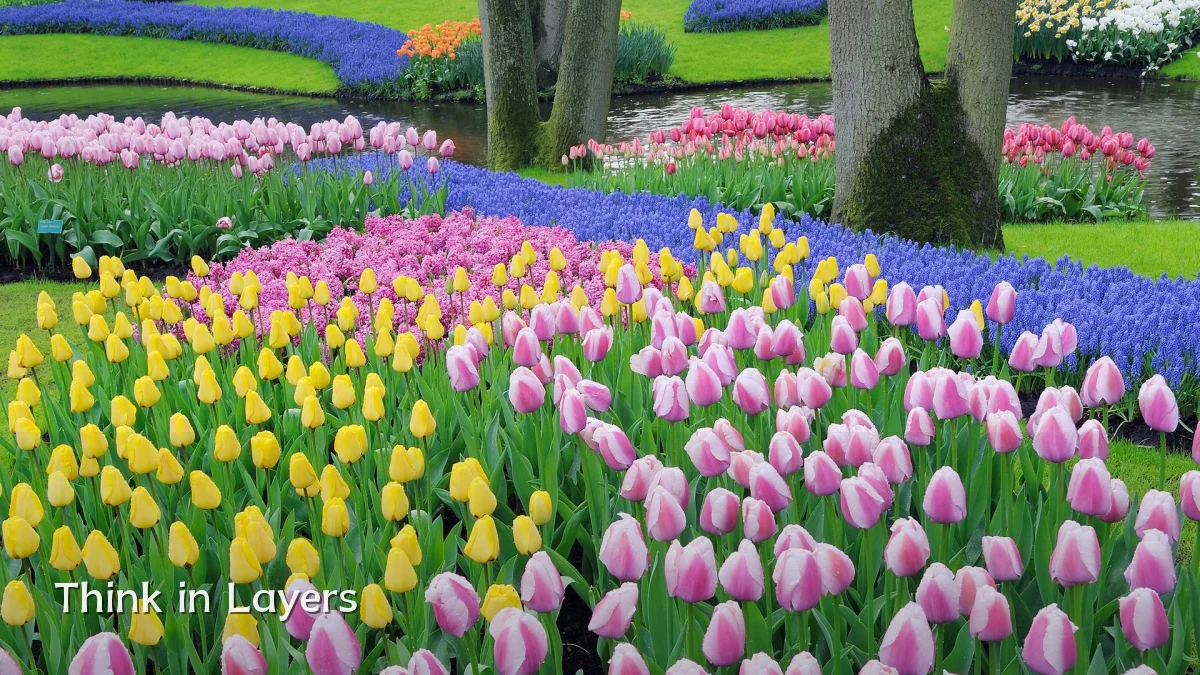
The upper layer is usually made of fruit or nut trees. In a small garden, this may mean dwarf or semi-dwarf trees instead of full-size canopy trees. Beneath them, shrubs such as berries or smaller fruiting plants can fill the middle layer. Herbs, flowers, groundcovers, bulbs, and root crops occupy the lower layers.
Vines can be productive, but they need careful placement. A vigorous vine can overwhelm a young tree if left unmanaged. Give vines their own strong support unless you are experienced with pruning and plant behavior.
The goal is not to cram in as many edible plants as possible. A crowded food forest is harder to maintain and can lead to poor airflow, weak growth, and pest problems. Leave space for mature plant size, access, and light.
| Layer | Beginner-friendly role | Design note |
|---|---|---|
| Small trees | Main long-term harvest | Choose varieties suited to your climate and available space. |
| Shrubs | Berries, flowers, habitat, wind filtering | Place where they will still receive enough sun to fruit. |
| Herbs and perennials | Pollinator support, pest confusion, edible leaves | Use near paths for easy cutting and regular use. |
| Groundcovers | Soil protection and weed suppression | Avoid aggressive spreaders unless you can contain them. |
| Roots and bulbs | Edible harvests and soil opening | Plant where digging will not damage young tree roots. |
Choose Plants for Function as Well as Food
Beginners often start with the question, “What do I want to eat?” That matters, but a more useful design question is, “What job does this plant do?” The best plants in a food forest often serve more than one purpose.
For example, a plant might provide fruit, attract pollinators, cover bare soil, break up compacted ground, offer mulch material, or support beneficial insects. Some plants are included mainly because they help the system work, even if they are not a major food crop.
Choose plants that match your climate and maintenance style. If a tree needs frequent spraying, complicated pruning, or perfect conditions to crop well in your area, it may not be the best beginner choice. Local nurseries, extension offices, community gardens, and experienced growers can help identify what reliably grows near you.
It is also wise to mix harvest times. A food forest planted only with early-season fruit may feel abundant for a few weeks and quiet for the rest of the year. Combining early, mid-season, and late harvests makes the garden more useful and resilient.
- Main crops: Fruit, nuts, berries, perennial vegetables, culinary herbs.
- Support plants: Pollinator flowers, mulch plants, nitrogen-fixing or soil-building plants where appropriate.
- Living mulch: Low-growing plants that shade soil and reduce weed pressure.
- Habitat plants: Flowers and seed heads that support insects and birds.
Before planting anything known to spread aggressively, check whether it is invasive in your region. A plant that is useful in one climate can become a long-term problem in another.
Build the Food Forest in Stages
A common mistake is planting everything at once and then being overwhelmed by watering, mulching, pruning, and weeding. A food forest is easier to establish in phases.
Start with the framework: paths, water flow, major trees, and large shrubs. These decisions shape everything else. Once the woody plants are in place, add mulch and protect the soil. Then introduce herbs, flowers, groundcovers, and smaller perennials as you learn how the space behaves.
Mulch is one of the most useful tools in a young food forest. It moderates soil temperature, holds moisture, feeds soil organisms, and reduces weed competition. Keep mulch away from direct contact with trunks and stems to avoid rot and pest issues.
During the first few years, expect to water, weed, replace a few plants, and adjust spacing. This is normal. A self-sustaining garden is not created instantly; it is guided into balance over time.
- Define the growing area and paths.
- Improve water capture or drainage where needed.
- Plant trees and large shrubs first.
- Add mulch and protect young plants from animals or foot traffic.
- Fill gaps with herbs, flowers, groundcovers, and seasonal crops.
- Observe results and adjust plant choices each season.
Avoid the Most Common Beginner Mistakes
The biggest beginner mistake is overplanting. Young plants look small, so it is tempting to fill every gap. A few years later, the same area can become tangled, shaded, and hard to harvest. Plan for mature size, not nursery size.
Another mistake is ignoring maintenance access. If you cannot reach a tree to prune it, check fruit, or harvest safely, the design will become frustrating. Paths, stepping stones, and open working areas are not wasted space; they make the garden usable.
Many new food forest gardeners also underestimate the establishment period. Young trees and shrubs need consistent care while roots develop. Even drought-tolerant plants usually need help during their first seasons, especially in dry or windy conditions.
Finally, avoid treating the food forest as a fixed design. Plants grow unevenly, some fail, and others thrive more than expected. The best designs leave room for change.
- Do not plant large trees too close to buildings, fences, pipes, or each other.
- Do not rely on one crop or one plant family for most of your harvest.
- Do not leave soil bare while waiting for the garden to mature.
- Do not add aggressive plants without a containment plan.
- Do not skip pruning research for fruit trees that need shaping to produce well.
Closing Thoughts: Start Small and Let the System Teach You
A beginner food forest does not need to look like a mature woodland garden right away. It can begin with one fruit tree, a few berry shrubs, pollinator herbs, mulch, and a clear path. From there, each season gives you information about light, soil, pests, harvests, and plant behavior.
The most successful approach is patient and practical. Choose plants suited to your place, give them enough room, protect the soil, and build diversity gradually. Over time, your edible garden can shift from constant effort to steady partnership, where the plants, soil, insects, and gardener each do part of the work.