How Afforestation Projects Restore Degraded Land and Support Climate Goals
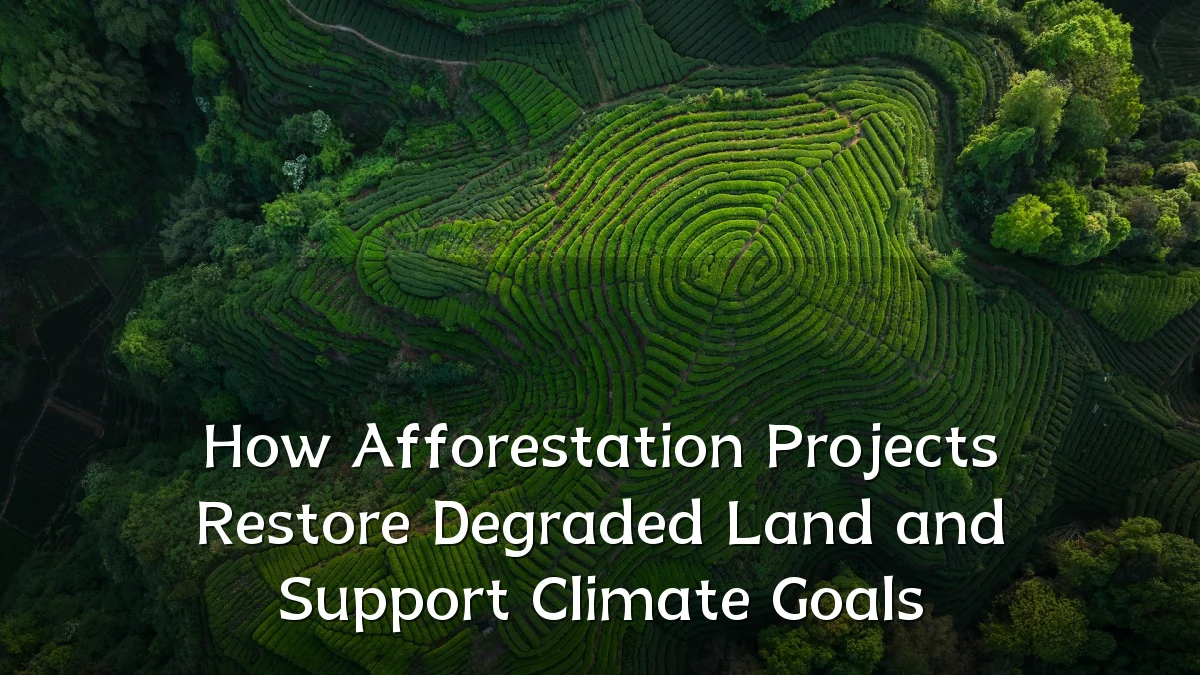
Degraded land often looks like a lost cause: thin soil, poor water retention, low biodiversity, and little economic value for nearby communities. For landowners, local governments, and project teams, the challenge is not simply planting trees. It is deciding whether trees are the right intervention, choosing species that can survive, and building a project that still works after the first planting season has passed.
Well-planned afforestation projects can help restore soil structure, reduce erosion, create habitat, and store carbon over time. Poorly planned ones can fail quickly, compete with local water needs, or replace more suitable native ecosystems. The difference is usually found in the groundwork: site assessment, species selection, long-term maintenance, and honest expectations about climate benefits.
What Successful Afforestation Looks Like on Degraded Land
Afforestation is the establishment of forest on land that has not recently been forested. On degraded sites, it is often used to rebuild ecological function, not just create tree cover. The best projects begin by asking what the land can realistically support.
In practical terms, a strong project usually shows several early signs of good planning:
- Soil conditions are assessed first. Compacted soil, salinity, nutrient depletion, and erosion risks influence whether planting will succeed.
- Water availability is understood. Young trees need support during establishment, especially in dry or highly seasonal climates.
- Native or climate-adapted species are prioritized. These are more likely to support local wildlife and tolerate regional conditions.
- Planting density is matched to the site. Dense planting may help canopy closure, but overcrowding can increase stress and mortality.
- Protection is planned. Grazing, fire, invasive plants, and human disturbance can undo a project before trees mature.
On severely degraded land, trees may not be the first step. Grass cover, erosion control, mulching, fencing, or soil amendments may be needed before saplings can survive. A phased approach often works better than planting a large area all at once.
How Afforestation Supports Climate Goals Without Oversimplifying Them
Afforestation can contribute to climate goals by removing carbon dioxide from the atmosphere as trees grow and store carbon in trunks, roots, leaf litter, and soil. It can also help landscapes become more resilient to heat, flooding, and wind erosion. However, the climate value depends heavily on project design and long-term survival.
A young plantation does not deliver the same carbon benefit as a mature, diverse forest. Carbon storage builds gradually, and losses from fire, drought, disease, or land-use change can reduce the benefit. This is why credible projects focus on permanence, monitoring, and risk management rather than relying only on the number of trees planted.
Good afforestation planning also considers wider climate effects. In some regions, trees can improve microclimates and water infiltration. In others, planting the wrong species in the wrong place can reduce streamflow or stress groundwater. Climate goals should therefore be evaluated alongside local ecology, water needs, and community priorities.
Common Mistakes That Cause Afforestation Projects to Fail
Many afforestation efforts fail for predictable reasons. The most common problem is treating planting day as the finish line. In reality, planting is only the beginning of a long establishment period.
- Choosing fast-growing species without checking ecological fit. Fast growth can be useful, but it should not come at the cost of invasiveness, high water demand, or low habitat value.
- Ignoring local land use. If communities rely on the land for grazing, fuelwood, access routes, or seasonal harvesting, conflict can damage both the project and local trust.
- Planting during poor seasonal windows. Saplings placed just before drought or extreme heat often experience high mortality.
- Using one-species plantations everywhere. Monocultures may be easier to manage, but they are often more vulnerable to pests, disease, and climate stress.
- Underfunding maintenance. Watering, weeding, replanting, firebreaks, and monitoring require resources beyond the initial budget.
Another frequent mistake is using afforestation to claim climate progress while avoiding emissions reductions elsewhere. Tree planting can be part of a climate strategy, but it should not be treated as a substitute for reducing fossil fuel use, improving efficiency, or protecting existing forests.
How to Select or Evaluate an Afforestation Project
Whether you are supporting, funding, managing, or reviewing an afforestation project, the most useful questions are practical. A credible project should be able to explain why the site was chosen, which species are being planted, how survival will be measured, and who is responsible for long-term care.
| What to Check | Why It Matters |
|---|---|
| Site history | Shows whether afforestation is appropriate or whether another restoration method would be better. |
| Species mix | Affects survival, biodiversity, water demand, and long-term resilience. |
| Community involvement | Improves protection, local benefits, and acceptance of land-use changes. |
| Maintenance plan | Determines whether saplings are likely to survive beyond the first few seasons. |
| Monitoring method | Helps verify survival rates, growth, carbon estimates, and ecological outcomes. |
| Risk planning | Addresses fire, drought, pests, grazing pressure, and future land-use changes. |
If a project only reports the number of trees planted, ask for more detail. Survival rates, canopy development, soil improvement, and biodiversity indicators are usually more meaningful than planting totals. For climate claims, the project should be clear about assumptions, timeframes, and how carbon storage is estimated.
It is also worth checking whether afforestation is being used in the right landscape. Some open ecosystems, such as natural grasslands, shrublands, or peatlands, may store carbon and support biodiversity without becoming forests. Planting trees there can cause ecological harm. Restoration should fit the ecosystem, not force every degraded area into the same model.
Closing Summary
Afforestation projects can restore degraded land and support climate goals when they are designed around the realities of the site. The strongest projects look beyond tree counts and focus on soil recovery, water availability, species diversity, community needs, and long-term care.
For anyone evaluating or planning an afforestation effort, the key question is simple: will this planting become a resilient ecosystem, or just a short-lived campaign? When the answer is grounded in local conditions and sustained management, afforestation can be a practical tool for land restoration and climate action.