How Trees Fight Climate Change: Carbon Storage, Cooling, and Cleaner Air
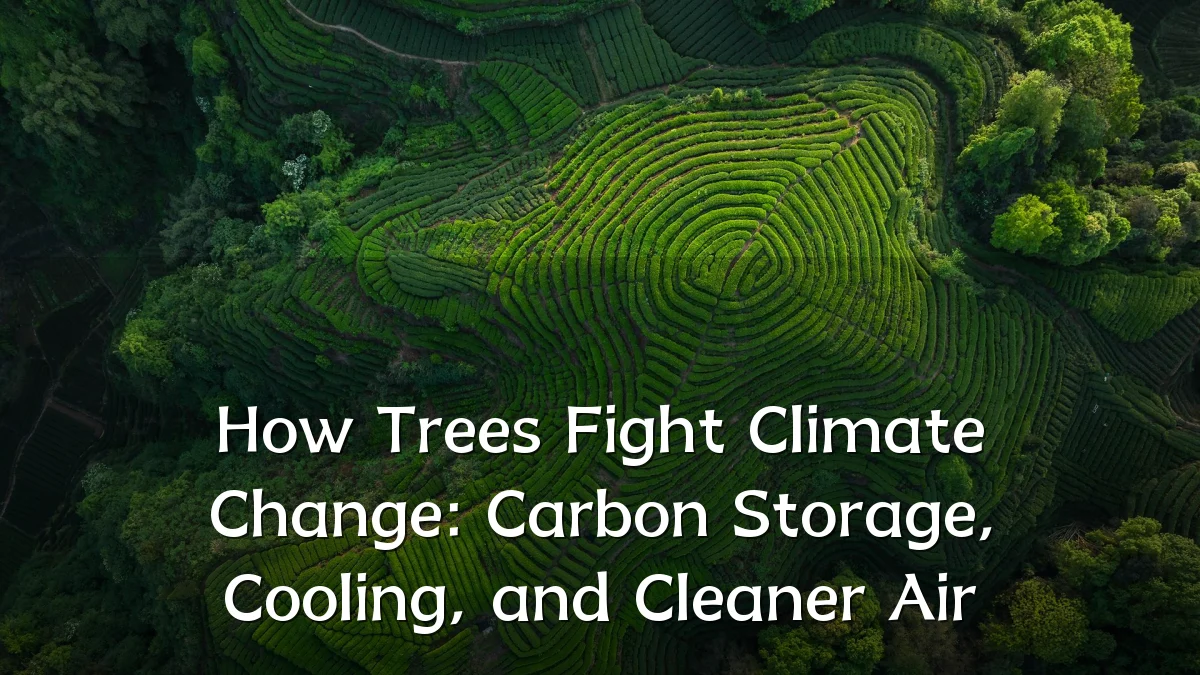
If you are trying to make sense of climate change at the local level, trees can feel both obvious and confusing. Planting a tree sounds helpful, but people quickly run into practical questions: Which tree? Where should it go? Does one yard tree matter? What if it dies? And how long does it take before it helps?
The honest answer is that trees are not a substitute for cutting fossil fuel emissions, but they are one of the most visible and useful climate tools communities can use. A healthy tree stores carbon, cools streets and buildings, filters polluted air, slows stormwater, and makes outdoor spaces more livable. The key is choosing, planting, and caring for trees in ways that help them survive for decades.
What Trees Actually Do for the Climate
Trees fight climate change in several overlapping ways. The best-known benefit is carbon storage. As trees grow, they pull carbon dioxide from the air and store carbon in trunks, branches, roots, and surrounding soil. Large, long-lived trees usually store far more carbon than small, short-lived ones.
But carbon is only part of the story. In many neighborhoods, especially dense urban areas, the cooling effect of trees is just as important. Tree canopies shade pavement, walls, cars, and roofs that would otherwise absorb and radiate heat. Through transpiration, trees also release moisture from their leaves, which can cool the air around them.
Trees can also improve air quality. Leaves and bark can capture some particles, and trees can help reduce the formation of heat-related air pollution by lowering local temperatures. The effect depends on species, location, traffic levels, and airflow, but well-placed trees often make streets feel cleaner and more comfortable.
In practice, the most valuable climate trees are not always the newest ones. A mature tree that is already thriving may be providing shade, habitat, stormwater benefits, and carbon storage that would take a new sapling many years to replace.
Practical Observations from Real Planting Sites
On the ground, tree success is usually less about the planting ceremony and more about the conditions after planting. Many young trees fail because they are placed in compacted soil, planted too deeply, watered poorly, or ignored during hot, dry periods.

Urban sites are especially challenging. A tree planted in a narrow strip between sidewalk and street may face reflected heat, road salt, limited rooting space, dog damage, and irregular watering. In those conditions, a tough, moderately sized tree with enough soil volume may outperform a more impressive species that needs deeper, cooler, or wetter soil.
Yard trees have different issues. Homeowners sometimes plant too close to buildings, fences, overhead wires, or underground utilities. A small sapling may look harmless at first, but a healthy tree needs room for its mature canopy and roots. Thinking in terms of the full-grown tree prevents expensive pruning, sidewalk damage, or removal later.
One reliable lesson is that maintenance matters most in the first few years. Deep watering during dry spells, keeping mulch away from the trunk, protecting the bark, and removing stakes at the right time can make the difference between a tree that survives and one that slowly declines.
Common Mistakes That Reduce Climate Benefits
A common mistake is treating any planting as automatically climate-positive. If a tree is poorly matched to the site and dies within a few years, the benefit is limited, and replacement adds more labor and cost. Survival is the first climate goal.
Another mistake is focusing only on fast growth. Fast-growing trees can be useful, especially where quick shade is needed, but some may have weak wood, short lifespans, aggressive roots, or higher maintenance needs. A slower-growing tree that lives for many decades may provide greater long-term benefit.
People also sometimes remove older trees too quickly because they drop leaves, block a view, or require cleanup. Of course, hazardous trees should be assessed and managed, but healthy mature trees are major assets. Before removing one, it is worth asking whether pruning, soil care, or a professional inspection could solve the problem.
Planting too many of the same species is another risk. A neighborhood lined with one tree type may look consistent, but it is more vulnerable to pests, disease, and climate stress. Diversity helps keep the canopy resilient when conditions change.
- Avoid planting trees too deeply; the root flare should not be buried.
- Do not pile mulch against the trunk, as it can trap moisture and encourage decay.
- Do not rely on lawn sprinklers alone; young trees often need slow, deep watering.
- Do not plant under power lines unless the mature height is appropriate.
- Do not choose a species only because it grows quickly or looks attractive in a nursery pot.
How to Choose Better Climate Change Trees
The best climate change trees are the ones that can live a long time in the specific place where they are planted. Start with site conditions: available space, sunlight, soil type, drainage, wind exposure, heat, nearby pavement, overhead wires, and underground utilities.
Native and well-adapted regional trees are often strong candidates because they may support local wildlife and tolerate local climate patterns. However, climate change is shifting temperature, rainfall, and pest pressures, so the best choice may be a mix of native, near-native, and climate-adapted species recommended by local arborists, extension services, or urban forestry programs.
For cooling, prioritize canopy. A shade tree on the south or west side of a building can help reduce heat gain during hot periods, while trees along sidewalks and parking areas can make outdoor spaces more bearable. For carbon storage, look for species known to be long-lived and structurally strong when planted in suitable soil.
For cleaner air, placement matters. Trees and shrubs can help create a buffer near busy roads, but dense plantings in narrow street canyons may affect airflow in complex ways. In polluted areas, a layered planting design with appropriate spacing often works better than simply packing in as many trees as possible.
| Goal | What to Look For | What to Avoid |
|---|---|---|
| Carbon storage | Long-lived species with room to mature and strong structure | Short-lived trees in cramped or stressful sites |
| Cooling | Broad canopy, good placement near pavement or buildings, adequate soil | Planting where roots cannot support a healthy canopy |
| Cleaner air | Diverse plantings, healthy foliage, thoughtful spacing near pollution sources | Overcrowded plantings that become stressed or poorly maintained |
| Resilience | Species diversity, drought tolerance, pest awareness, local guidance | Planting one species across an entire site or street |
Keeping Trees Alive Long Enough to Matter
A tree’s climate value increases as it grows, so aftercare is not optional. During establishment, most young trees need consistent watering, especially in hot or dry weather. The exact amount depends on tree size, soil, rainfall, and temperature, but the goal is to moisten the root zone without keeping it waterlogged.
Mulch is one of the simplest tools. A broad, shallow ring of organic mulch helps conserve moisture, moderate soil temperature, and reduce competition from grass. Keep mulch a few inches away from the trunk so the bark can stay dry and healthy.
Structural pruning can also improve long-term performance. Young trees often benefit from careful pruning that encourages a strong central leader, well-spaced branches, and fewer weak attachments. Heavy topping or careless cutting does the opposite; it can shorten a tree’s life and increase future risk.
It is also worth protecting existing soil. Compaction from vehicles, construction, or repeated foot traffic can damage roots and reduce water infiltration. If construction is planned near a valuable tree, root protection should be considered before work begins, not after decline appears.
A Practical Summary
Trees fight climate change by storing carbon, cooling hot places, improving air quality, and making communities more resilient. Their benefits are strongest when trees are healthy, long-lived, diverse, and well matched to the site.
The most climate-friendly approach is not simply to plant more trees anywhere possible. It is to protect mature trees, choose new trees carefully, plant them correctly, and care for them through heat, drought, pests, and urban stress. A tree that survives for decades becomes infrastructure: part shade system, part air filter, part carbon store, and part neighborhood refuge.
For anyone deciding what to do next, start close to home. Preserve the healthy trees you already have, add shade where heat is a problem, ask local experts what species are performing well, and commit to aftercare. That is how climate change trees move from a good idea to a lasting benefit.