Tree Canopy Benefits: How Urban Trees Improve Health, Climate, and Community Life

On a hot afternoon, the difference between a shaded street and an exposed one is not subtle. One sidewalk invites people to walk, wait for the bus, push a stroller, or talk with a neighbor. The other feels like something to get through quickly. That everyday experience is where tree canopy benefits become real: not as an abstract environmental idea, but as a practical part of how cities feel, function, and support daily life.
Urban trees do more than make streets attractive. A healthy canopy can reduce heat, soften stormwater impacts, improve comfort, support mental well-being, and create shared spaces that feel more livable. The benefits are strongest when trees are selected carefully, planted in the right places, and cared for long enough to mature.
What You Notice First: Shade, Comfort, and Health
The most immediate benefit of tree canopy is shade. In dense neighborhoods with lots of pavement, buildings and roads absorb heat during the day and release it slowly. Tree cover helps interrupt that cycle by shading hard surfaces and cooling the air through transpiration.

For residents, that can change ordinary routines. Walking to school feels safer and less exhausting. Outdoor workers get more relief during breaks. Older adults and people with health conditions are less exposed to intense heat when moving through the neighborhood. Even small strips of shade along sidewalks can make public space more usable.
Tree canopy also supports health in less visible ways. Streets with trees often feel calmer and more inviting, which can encourage walking and time outdoors. Views of greenery may help reduce stress and mental fatigue. While trees are not a cure-all for public health challenges, they are one of the few forms of city infrastructure that can improve comfort, beauty, and daily well-being at the same time.
Climate and Stormwater Benefits You Can See Over Time
Urban trees are often discussed in terms of climate, but their local effects are easiest to understand block by block. A mature tree can shade roofs, sidewalks, parked cars, and building walls. When many trees work together, the canopy helps reduce heat buildup across a neighborhood.
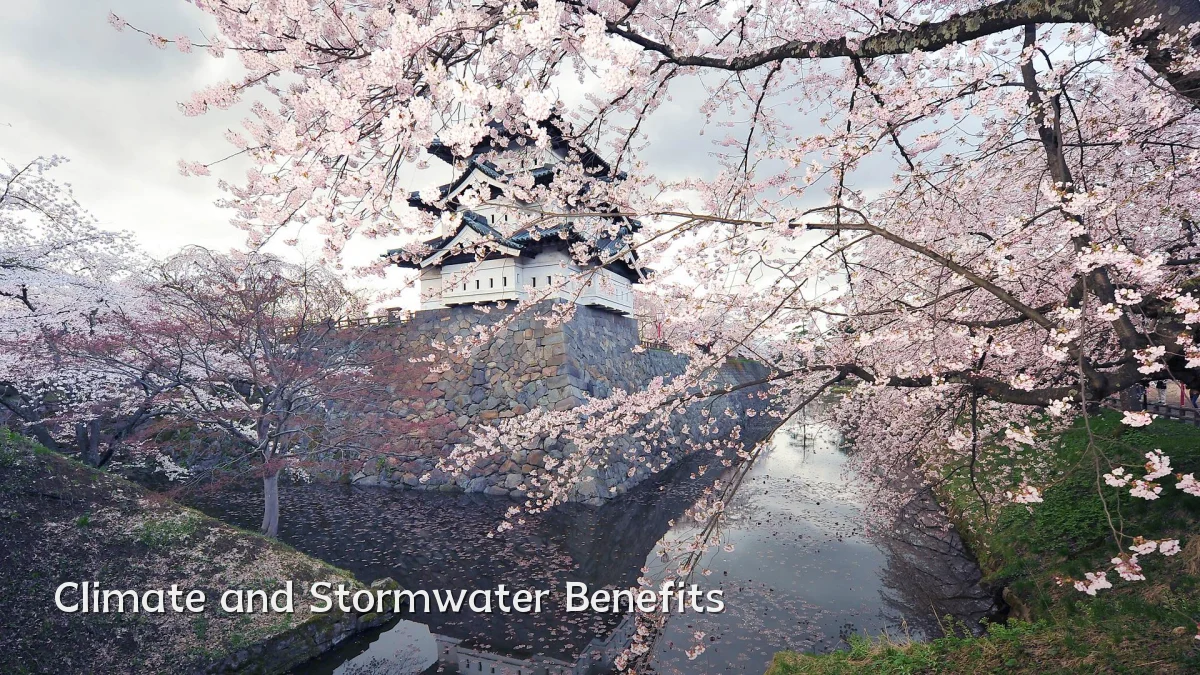
Trees also help manage rainwater. Leaves, branches, roots, and surrounding soil slow down rainfall before it reaches drains and streets. This can reduce the speed and volume of runoff during storms, especially when trees are planted in open soil or designed planting areas rather than tiny compacted pits.
Another long-term benefit is carbon storage. Trees absorb carbon as they grow, but the climate value of urban canopy is not only about carbon. In cities, shade and cooling can also reduce demand for air conditioning when trees are well placed near buildings. The best results come from a connected canopy, healthy soils, and species that can survive local heat, drought, pests, and winter conditions.
Community Life Improves When Trees Are Treated as Shared Infrastructure
Tree canopy changes how people use public space. Shaded parks, schoolyards, and streets are more comfortable for gathering, playing, resting, and walking. A tree-lined route can make a short errand feel pleasant instead of stressful. In business districts, shade can make outdoor seating and storefront areas more appealing without needing major redesign.
There is also a social side to canopy care. Planting days, watering schedules, and neighborhood tree walks can give residents a shared reason to participate in local stewardship. When people help care for young trees, they are more likely to notice damage, report problems, and advocate for better maintenance.
However, tree canopy benefits are not always evenly distributed. Some neighborhoods have mature shade and leafy parks, while others have wide roads, limited planting space, and few healthy trees. Expanding canopy fairly means looking beyond citywide averages and asking which streets, schools, bus stops, and housing areas need shade the most.
Common Mistakes That Limit Tree Canopy Benefits
One common mistake is planting trees without planning for their mature size. A small sapling may look easy to place, but its roots, branches, and canopy need room to grow. Crowding trees under utility lines, too close to buildings, or in narrow soil openings often leads to heavy pruning, poor health, or early removal.
Another mistake is focusing only on planting numbers. New trees matter, but survival matters more. Young urban trees often need watering, mulch, protection from damage, and structural pruning during their early years. Without maintenance, a planting campaign can look successful at first and then quietly fail.
Species selection also matters. Relying too heavily on one type of tree can make a neighborhood vulnerable to pests or disease. Choosing species unsuited to local soil, heat, salt, drought, or drainage conditions can lead to weak growth. A resilient urban canopy usually includes a diverse mix of trees matched to site conditions.
Finally, cities sometimes remove mature trees too casually during construction. A newly planted tree cannot immediately replace the shade, habitat, and cooling provided by a large established tree. When possible, protecting existing healthy trees should be considered before removal and replacement.
Practical Advice for Choosing, Planting, and Caring for Urban Trees
The best tree is not simply the fastest-growing or the most attractive at the nursery. It is the tree that fits the site and can thrive there for decades. Before planting, consider overhead wires, underground utilities, sidewalk width, soil volume, drainage, sun exposure, road salt, foot traffic, and nearby buildings.
For streets and small spaces, choose trees with growth habits that fit the available room. For parks, yards, and wide planting strips, larger canopy trees may provide greater long-term shade and cooling. In all cases, diversity is important. A mix of species, sizes, and bloom or leaf characteristics can make the canopy more resilient and visually interesting.
Good planting technique is just as important as selection. Trees should be planted at the correct depth, with roots encouraged to spread into surrounding soil. Mulch can help conserve moisture and reduce mower or string-trimmer damage, but it should not be piled against the trunk. Watering is especially important during establishment, particularly through dry periods.
For residents, the most useful actions are often simple: water young trees when allowed and needed, keep mulch away from trunks, avoid compacting soil around roots, and report broken branches or signs of stress. For property owners and local agencies, long-term maintenance budgets should be planned alongside planting projects, not treated as an afterthought.
Closing Summary: Canopy Works Best When It Is Planned for the Long Term
Tree canopy benefits show up in daily comfort, safer-feeling streets, cooler neighborhoods, better stormwater management, and stronger community spaces. The value grows over time, especially when trees are planted where shade is needed most and cared for through maturity.
Urban trees are living infrastructure. They need space, species diversity, healthy soil, and steady maintenance. When communities treat canopy as essential rather than decorative, trees become one of the most practical tools for improving health, climate resilience, and everyday neighborhood life.